Pathway, copper & fiber
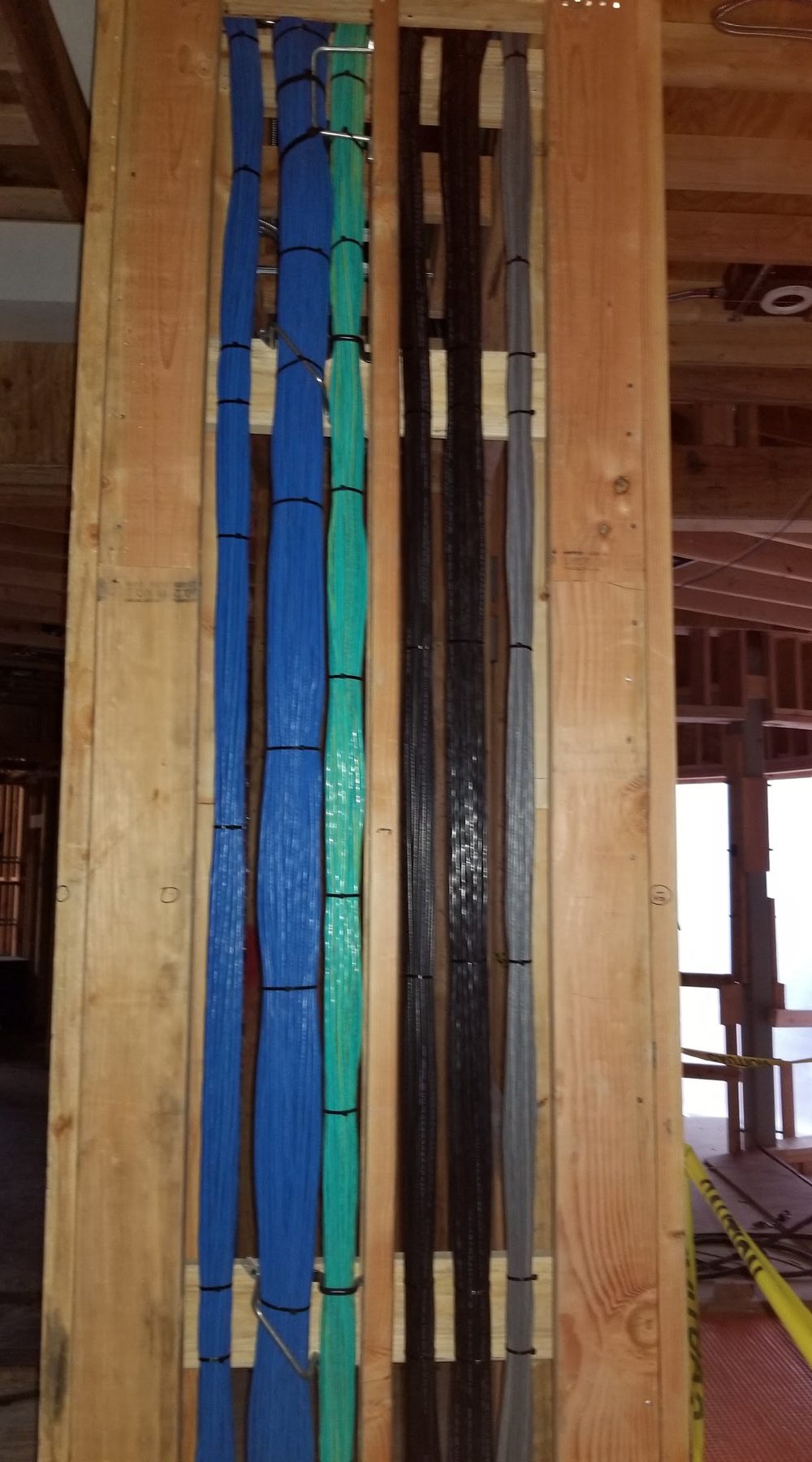
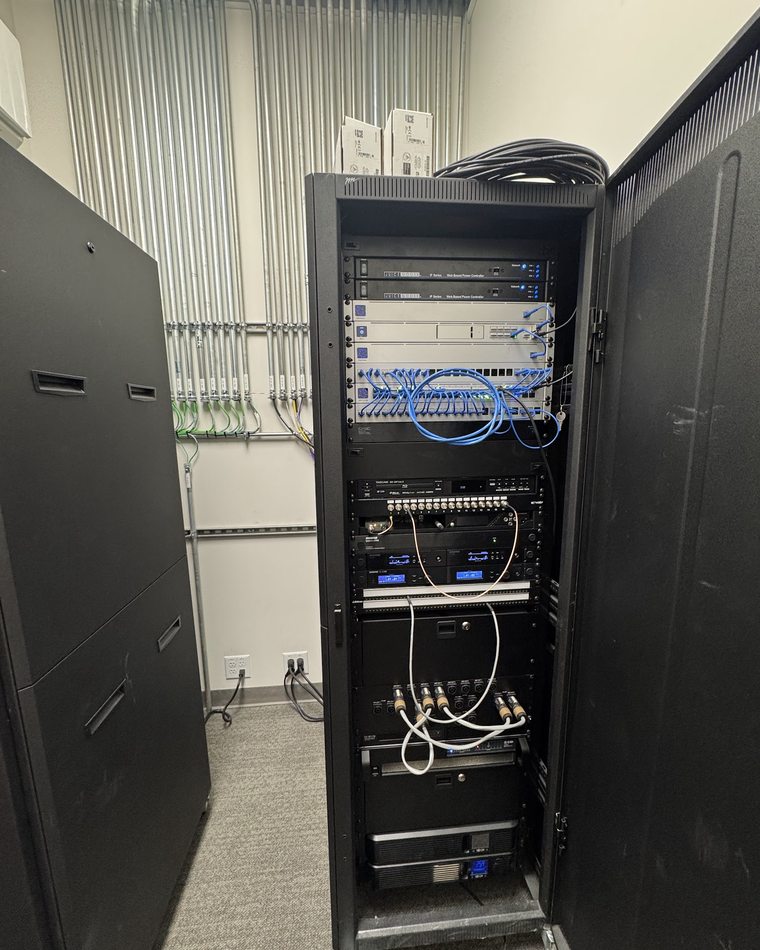
Pathway routed and supported, terminations to T568A, backbone spliced and tested, racks dressed, every port labeled, every channel certified with results you keep.
Any manufacturer's plant, terminated one consistent way.
Network infrastructure & low-voltage systems · Colorado Springs
We design, build and certify that layer — pathway, copper, fiber, transport, wireless. Manufacturer-neutral, standards-first, and documented well enough that the next technician doesn't need us.
Most network problems are physical-layer problems wearing a costume.
A camera stream that drops at dusk. A nurse call that lags. A reader that goes offline every cold snap. The ticket says software. The cause is usually a run that was never certified, a pathway that was never planned, or a switch never sized for what got plugged into it. We work the layer underneath the symptom, and document it so it stays solved.
Four layers, worked in order, each specified against a published standard rather than a product line. That's why the design survives a change of manufacturer — or a change of us.
Pathway routed and supported, terminations to T568A, backbone spliced and tested, racks dressed, every port labeled, every channel certified with results you keep.
Any manufacturer's plant, terminated one consistent way.
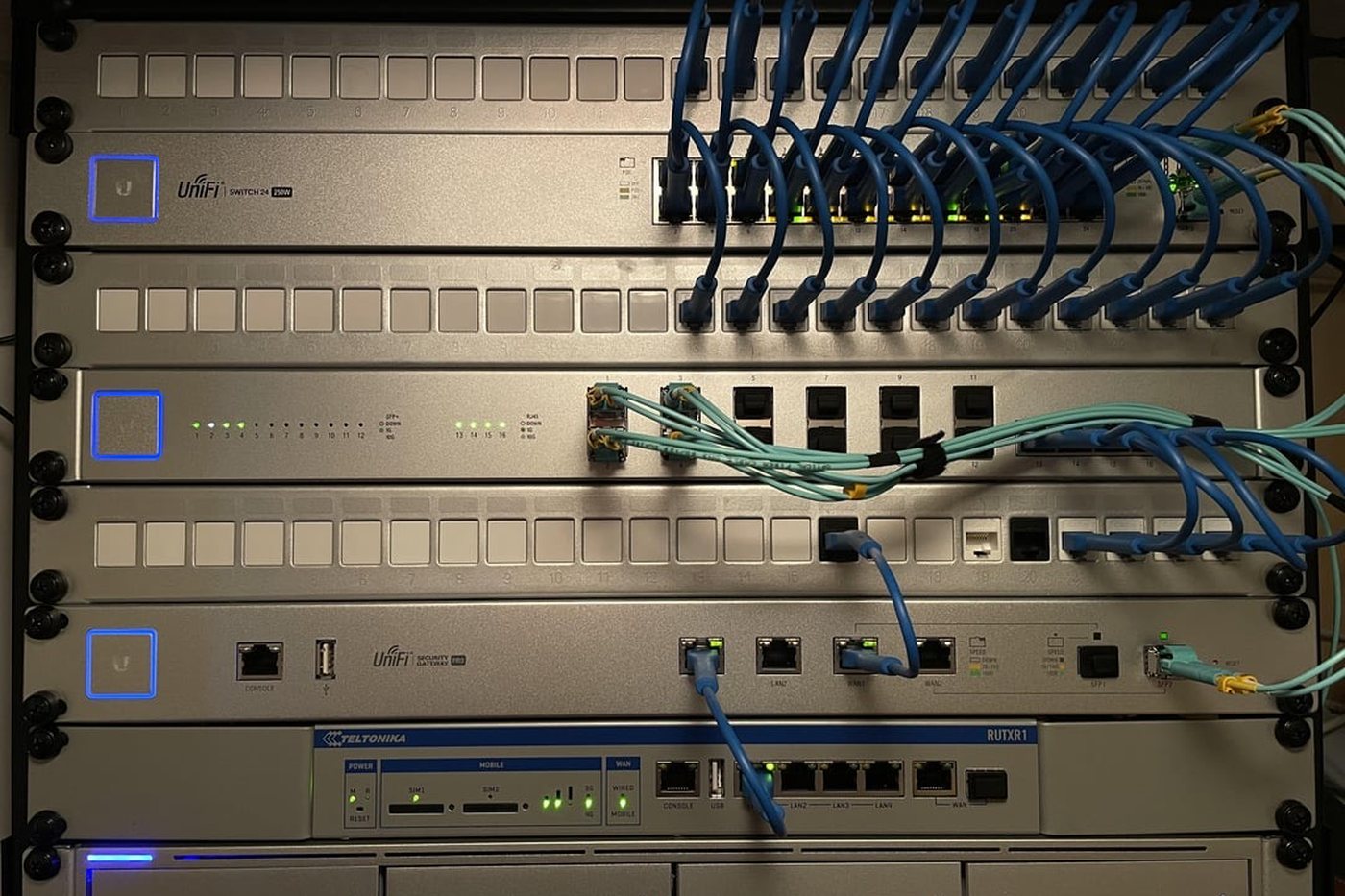
Core and edge design, PoE budgeted against real load, VLANs that keep clinical, camera, building and guest traffic apart, 802.1X where it belongs, redundant uplinks, and firewall policy that exists as a document.
Enterprise, mid-market or open platforms — chosen per site, supported the same way.
Predictive and on-site surveys, 6 GHz channel planning under AFC, and placement that respects stone, plaster and lead-lined walls. Point-to-point bridges and satellite uplinks for sites the fiber map forgot.
Coverage proven with a meter, not with a coverage map from a brochure.
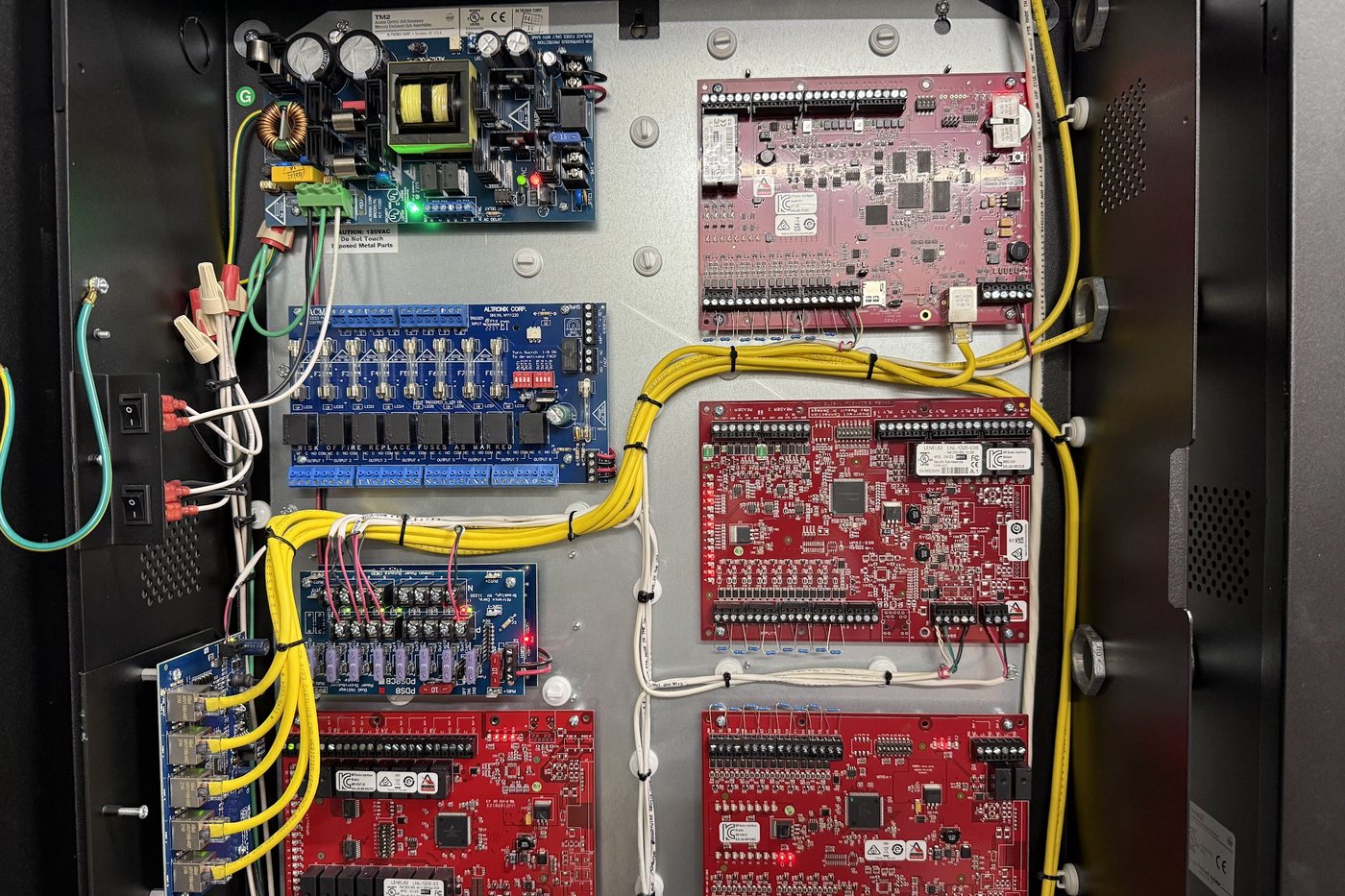
Video and storage sizing, access control, nurse call, networked audio and building systems — all planned against the same VLANs, PoE budget and switch capacity from the first drawing.
Open protocols first, so today's head-end never becomes tomorrow's hostage.
A hospital, a machine shop and a hundred-year-old chapel don't need the same hardware. Pretending otherwise is how a building ends up locked into a platform that stopped fitting it years ago.
What stays constant is the standard underneath. Build to open protocols and the gear becomes a decision you can revisit — with whoever is holding the ladder.
Eight conductors, one scheme, no exceptions. The technician who opens that closet in five years — us or not — shouldn't have to guess which convention the last crew used.
That discipline is the product. Port maps, panel-to-outlet schedules, a rack elevation that matches the rails, addressing and credentials handed over in writing — not a notebook in somebody's truck.
Copper before rock, racks that stay legible five years later, and the systems that ride on them. Different buildings, different manufacturers, same discipline.
Three environments that cover most of what a building can throw at a network: a regulated facility that can't go down, a structure built before anyone imagined a data closet, and a site with no utility connection.
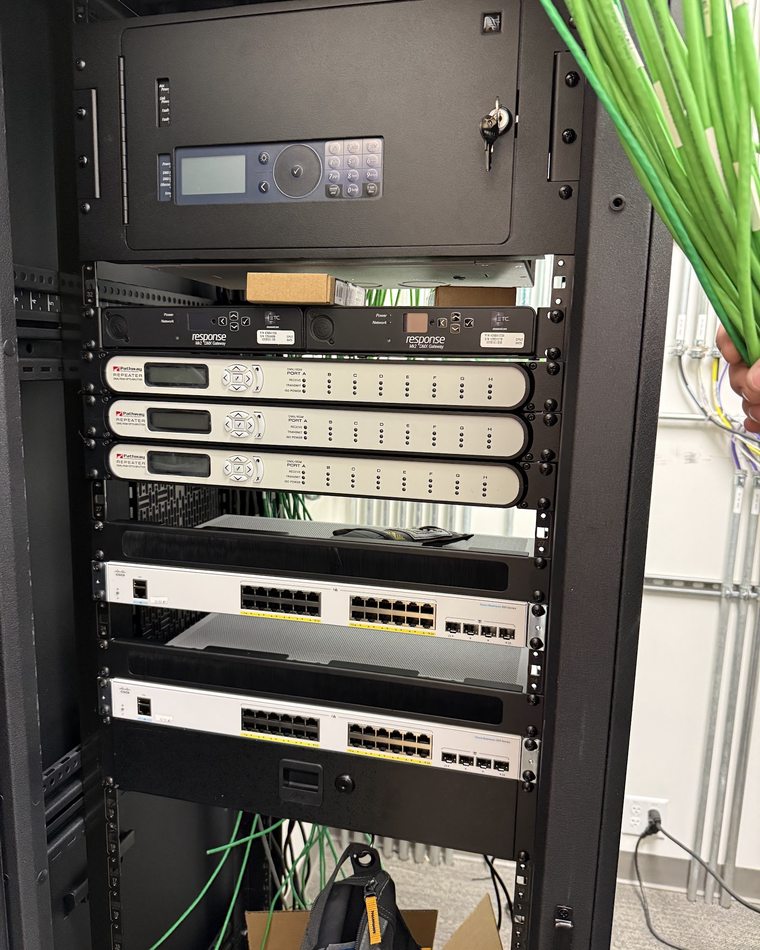
Rack build and structured wiring in a working healthcare facility — nurse call, access control and video on one documented backbone, cut over without taking clinical systems off the air.
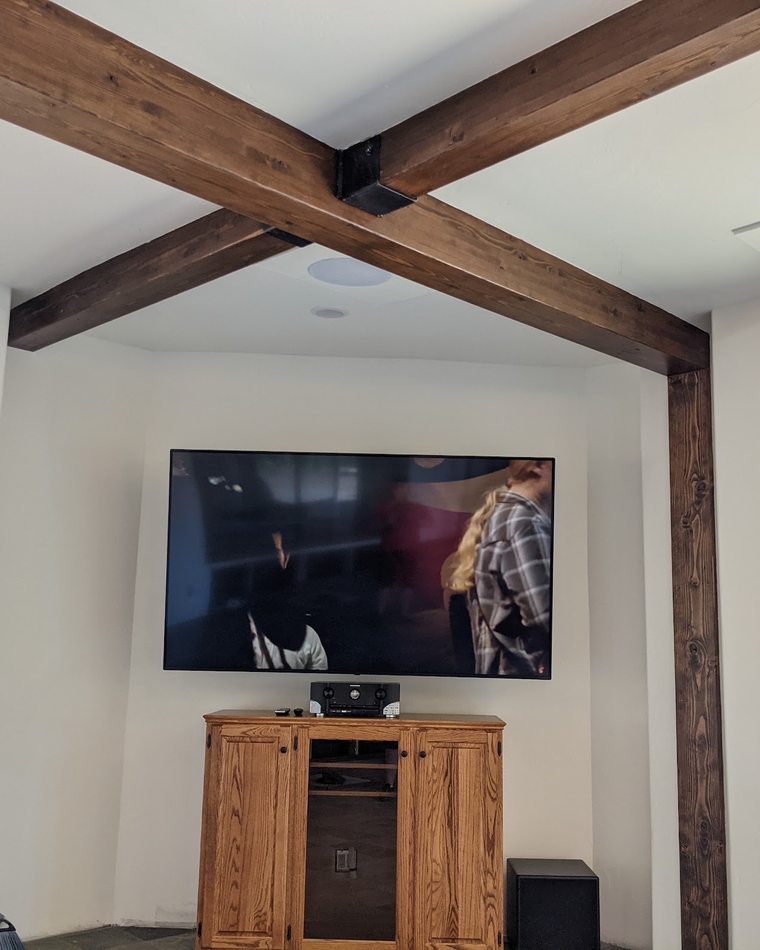
Network and audio threaded through a structure with no chase, no drop ceiling and walls worth protecting. Pathway planned around the building, not through it.
Satellite and point-to-point uplinks past the end of the utility line — power budget, weather sealing and unattended recovery, for sites four hours from the nearest technician.
Closets, pathway, panel capacity, existing plant. What's reusable, and what's hiding above the ceiling.
Drop counts, rack elevation, VLAN and PoE plan, bill of materials, and a fixed scope you can put in front of a board.
Pull, terminate, dress, configure, test. Cutover scheduled around your operations.
As-builts, labels, certification results, credentials, walkthrough — then support if you want us to keep the keys.
You reach the person who does the work. No account manager, no ticket queue — the person who walks your site is the person who terminates the jacks.